
Last updated September 10, 2026
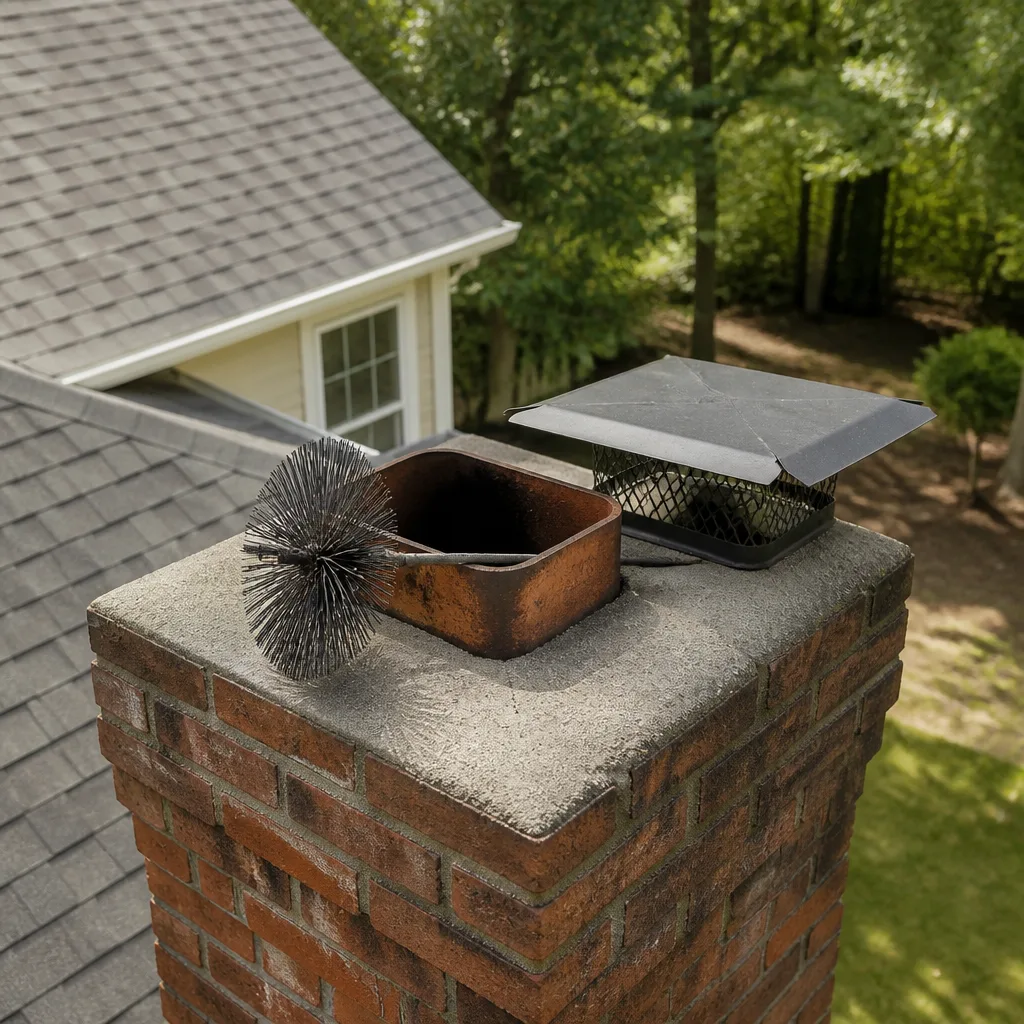
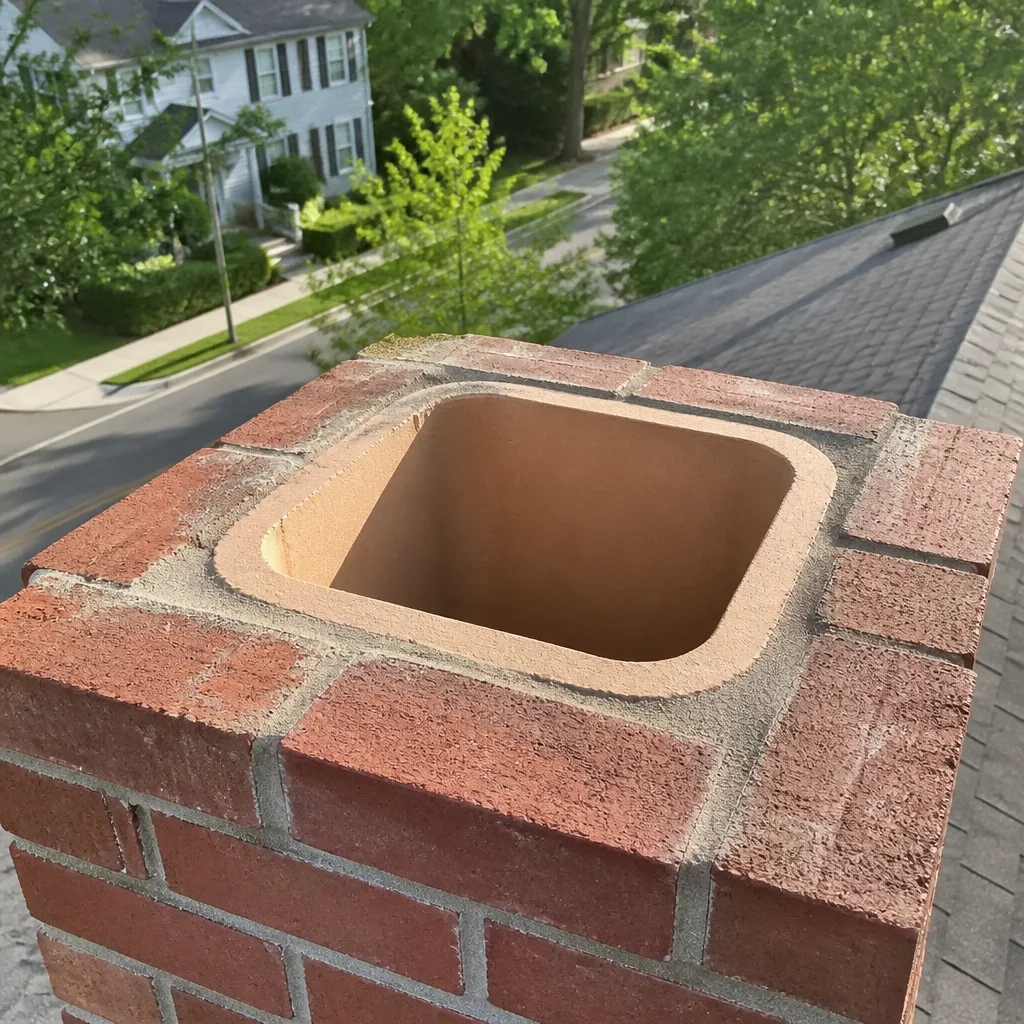
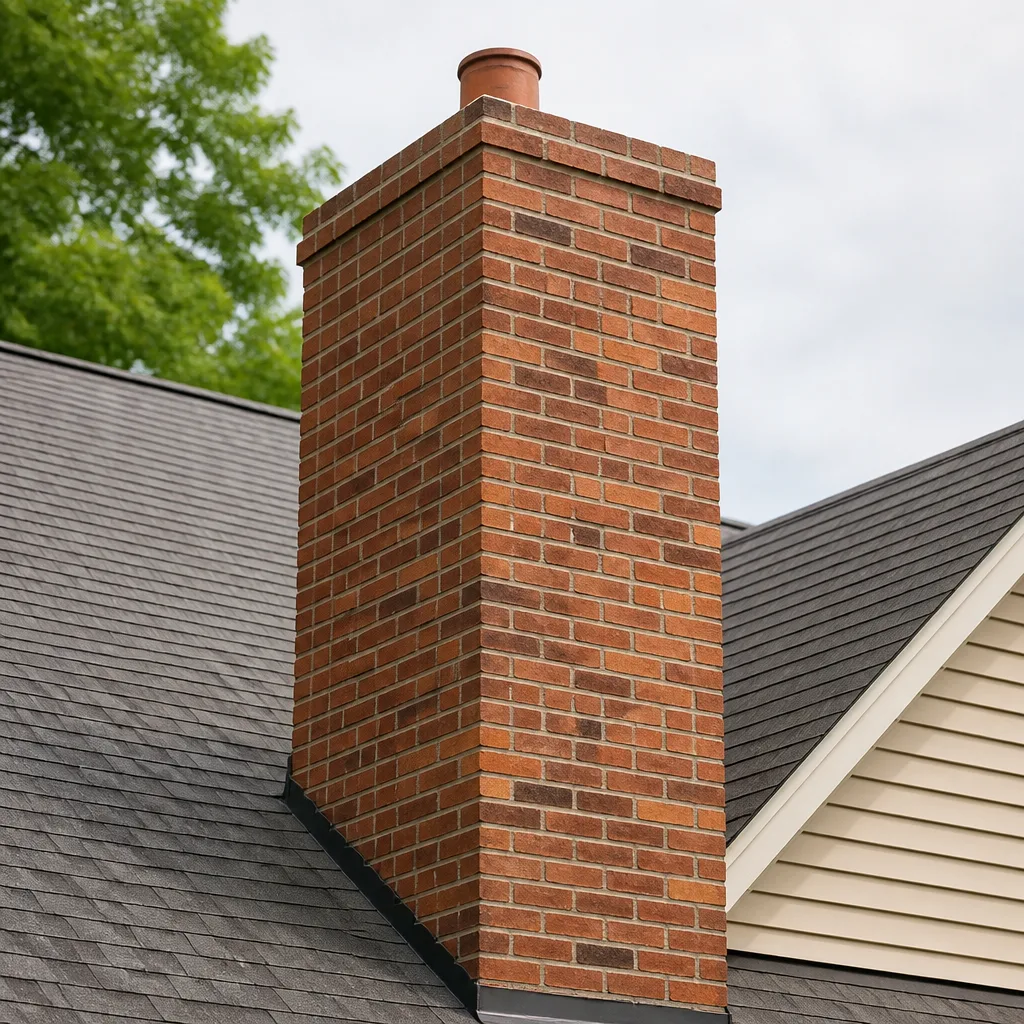
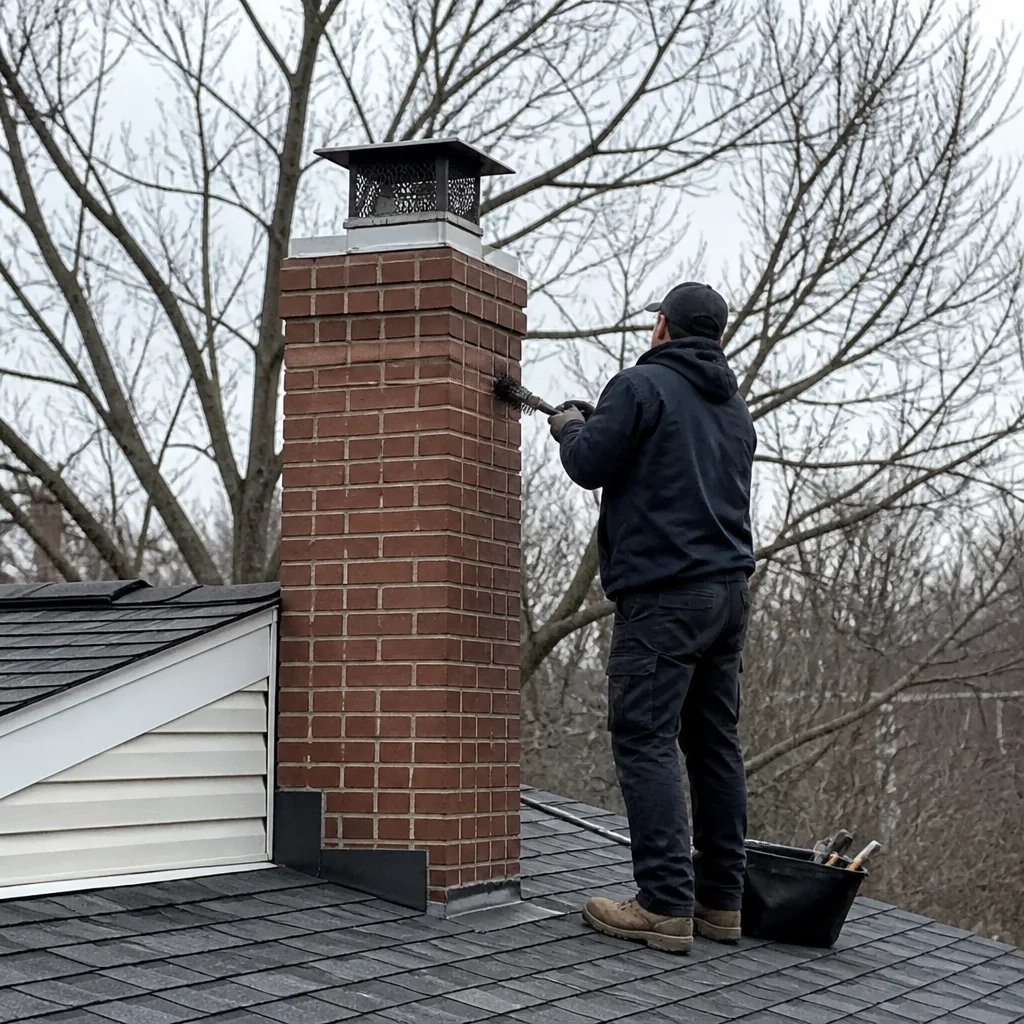
Level 1 sweep and inspection to the NFPA 211 annual standard - flue, crown, cap, and flashing checked and photographed
Chimney sweep logs do not sweep chimneys. They loosen some creosote - which then falls where a brush and vacuum still have to collect it.

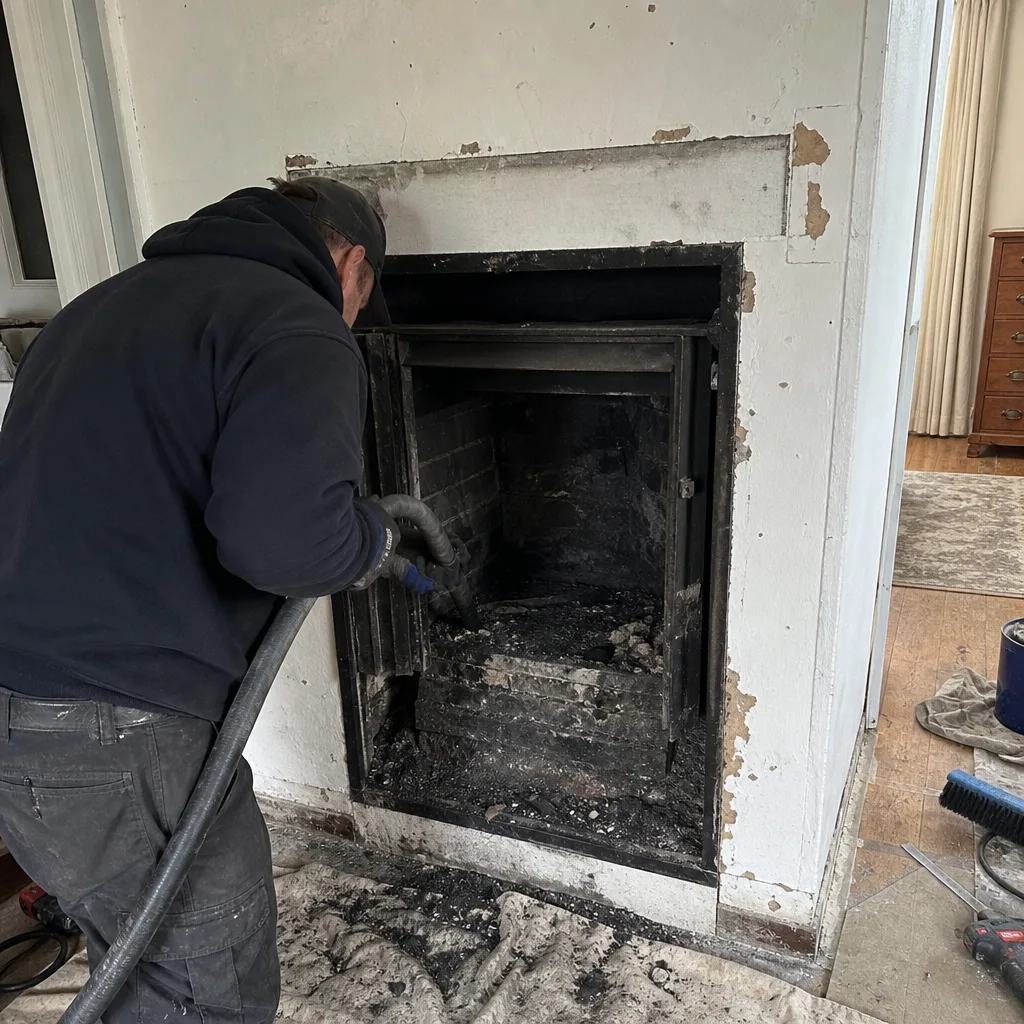 Before
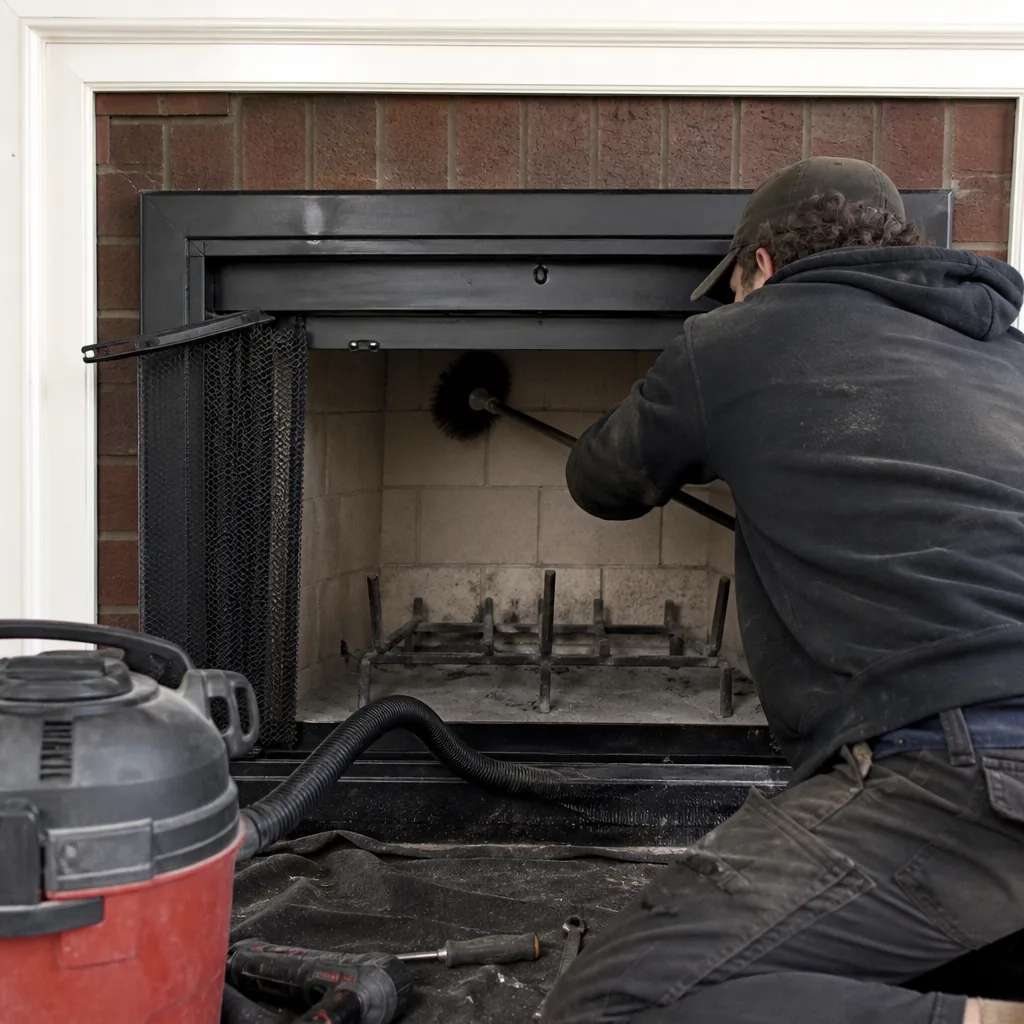 After
After Before
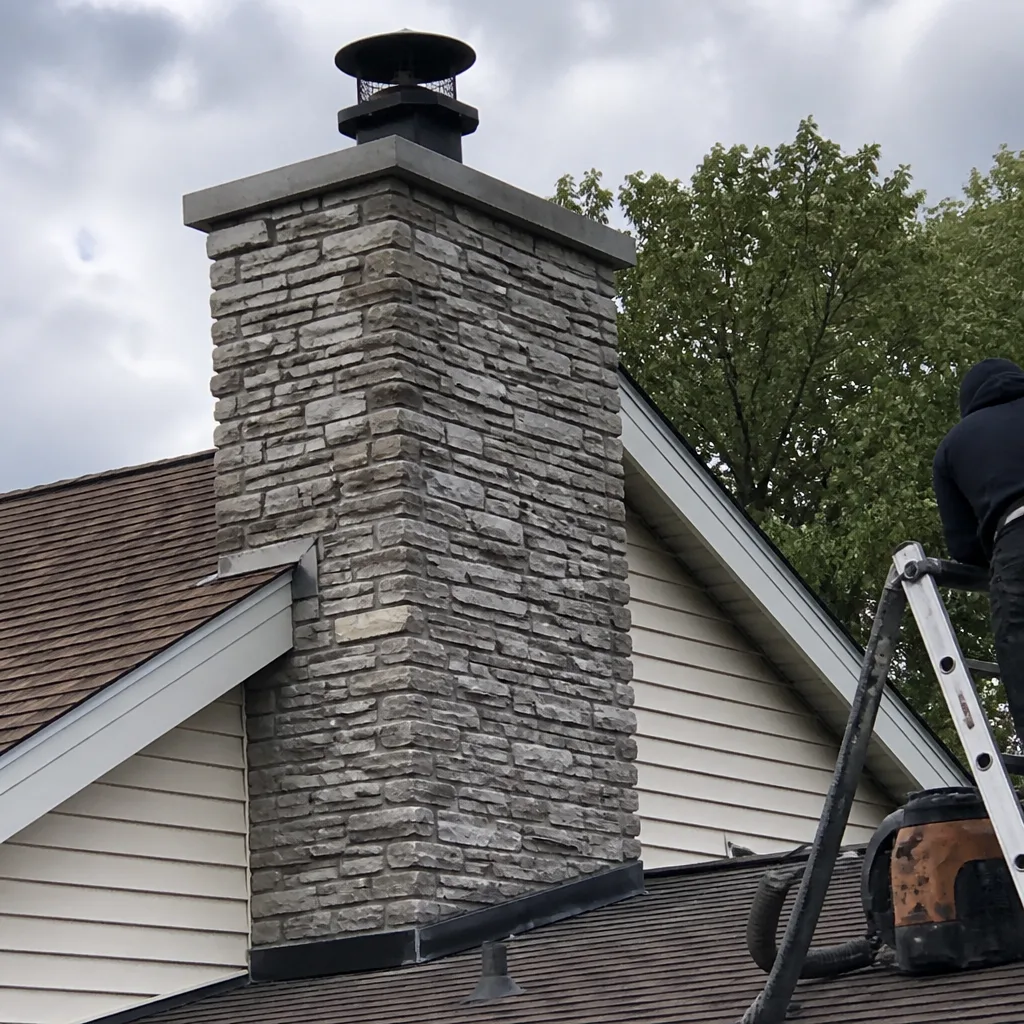 After
After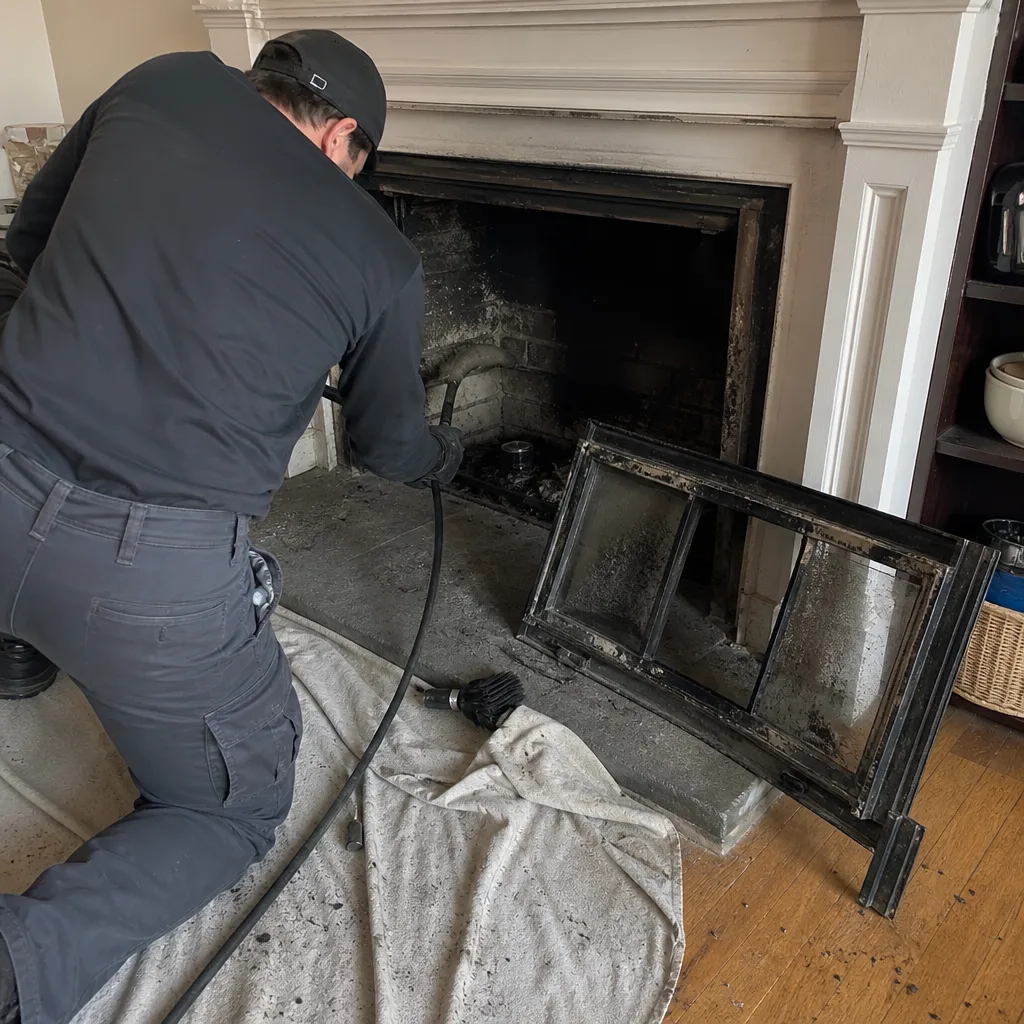 Before
 After
AfterChimney Cleaning & Sweep Maintenance Checklist for Ewing Homeowners
The most common maintenance mistake Ewing homeowners make isn’t skipping the sweep - it’s checking the box after the sweep and ignoring the six other items on the system that the sweep doesn’t touch. We’ve been in Ewing homes for over 42 years, and we’ve seen the pattern repeat: a clean flue with a cracked crown, a swept chimney with a damper that won’t seal, a passed inspection with flashing that’s two freeze-thaw cycles from a leak. This guide - along with our Complete Guide to Chimney Cleaning in Ewing - separates what you can check yourself from what requires a Level-2 camera, a trained eye, and professional-grade materials. It’s built for Ewing’s climate zone, not a national template.
Quick Answer
A complete chimney maintenance checklist for Ewing homeowners includes seven systems: the flue (swept annually), the crown and cap (inspected before winter), the damper (tested monthly during burning season), the firebox and liner (checked for cracks), the exterior masonry (watched for spalling and efflorescence), the flashing (examined after hard freezes), and the surrounding structure (clearances and combustibles). In Ewing’s freeze-thaw climate, neglecting any one of these can turn a $200 maintenance item into a $3,000 repair - or worse, an insurance claim that gets denied for lack of documented upkeep.
Table of Contents
- Why Ewing’s Freeze-Thaw Cycle Changes Your Maintenance Calendar
- What Homeowners Can Check: Monthly & Quarterly Tasks
- What Requires a Professional: Annual Inspection & Sweep Items
- The Pre-1985 Ewing Home: Masonry Items Others Miss
- Damper Operation as a Year-Round Safety Item
- Which Neglected Items Void Your Insurance After a Chimney Fire
- The Ewing Maintenance Calendar: Tied to Real Weather, Not Generic Seasons
- Why Professional-Grade Materials Matter in This Climate
Why Ewing’s Freeze-Thaw Cycle Changes Your Maintenance Calendar
Ewing sits in Mercer County’s transition zone between the coastal plain and the Piedmont, which means more freeze-thaw cycles than southern New Jersey and more moisture than the drier northwest counties. We’ve counted it: an average winter brings 25 to 35 days where temperatures cross 32 degrees, often with rain or snowmelt preceding the drop. Water enters masonry at the molecular level, expands when it freezes, and exits as spalling brick or eroding mortar. This isn’t theoretical. In the Glendale and Wilburtha sections, we’ve replaced crowns on homes that were fine in October and cracked by February.
The national advice says “inspect your chimney in fall.” That’s incomplete for Ewing. You need a pre-winter inspection, yes, but also a midwinter check after the first hard freeze sequence, and a post-thaw assessment in late March when the damage reveals itself. The checklist below builds this rhythm into your calendar.
Three climate-specific factors affect every Ewing chimney:
- Proximity to the Delaware River and Shabakunk Creek - higher ambient humidity means masonry dries slower and freezes harder
- Tree canopy in older neighborhoods - leaves and debris accumulate faster, and shade keeps masonry damp longer
- Pre-1985 construction with softer brick and lime-based mortar - more porous, less resistant to modern freeze-thaw severity
We’ve documented this with photos from Ewing inspections going back to the 1980s. The pattern is consistent: homes within a mile of water, homes under mature oak canopy, and homes built before 1985 show accelerated masonry degradation. Your checklist needs to account for this, not treat every chimney as identical.
What Homeowners Can Check: Monthly & Quarterly Tasks
Some items don’t require tools beyond a flashlight and a ladder you already own. These are your early-warning systems, the checks that tell you whether to call before small problems become large ones.
Monthly During Burning Season (October through March)
- Test the damper. Open it fully, close it fully, verify it seals. A damper that sticks halfway is a carbon monoxide risk - not a convenience issue. If you feel resistance, note whether it’s worse on humid days; corrosion on the hinge is often the cause in Ewing’s damp winters.
- Check for smoke spillage. Light a match, blow it out, watch the smoke. It should draw immediately up the flue. If it lingers or enters the room, stop using the fireplace and call for inspection.
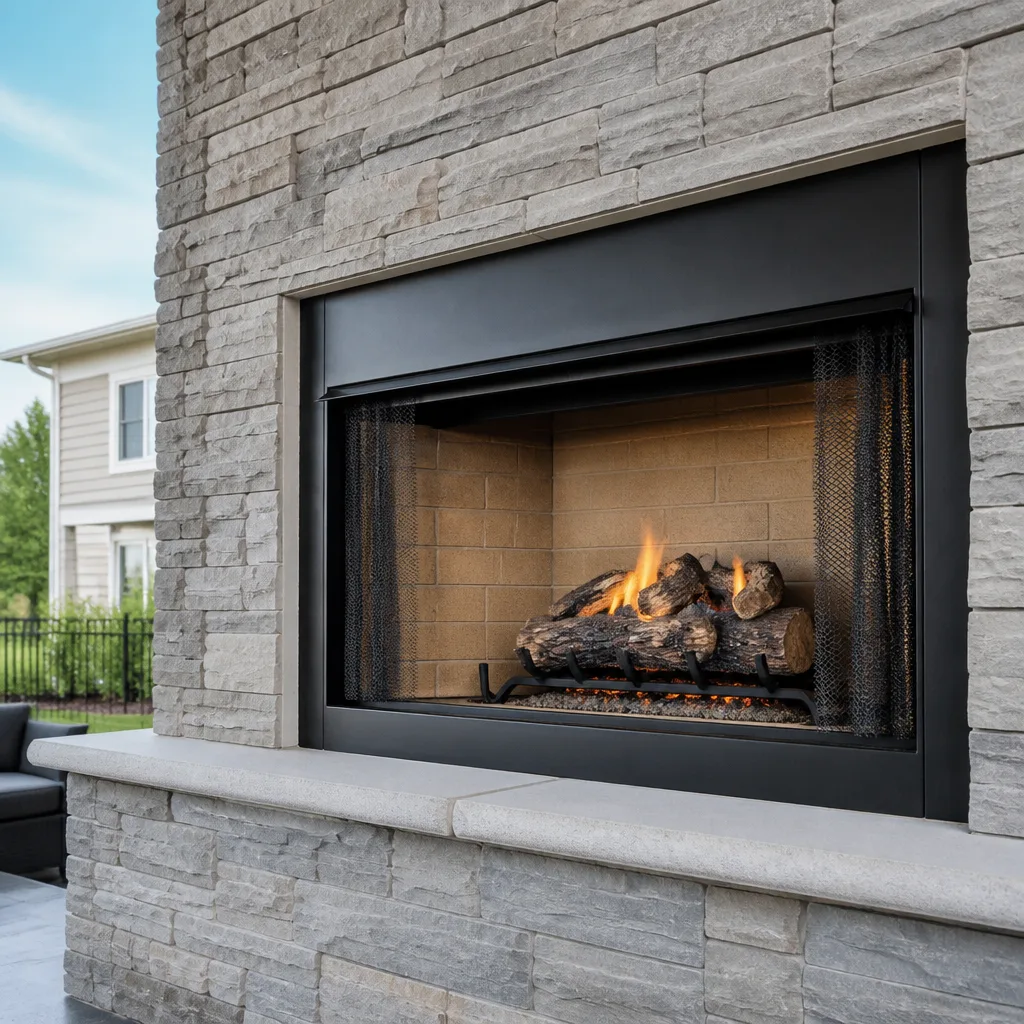
- Inspect the firebox for new cracks. Look for hairline fractures in the refractory panels or brick. A crack wider than a dime means heat is reaching combustibles behind the wall.
- Verify clearances. Nothing combustible within 36 inches of the opening, no decorations on the mantel that overhang, no stored firewood closer than the recommended distance.
Quarterly (January, April, July, October)
- Examine the chimney exterior from ground level. Binoculars help. Look for missing or spalling bricks, white powdery deposits (efflorescence), or vegetation growing from mortar joints. Any of these means water is getting in and salts are migrating out.
- Check the cap and crown from below. You won’t see the crown top, but you can see whether the cap is present, whether mesh sides are intact, and whether there’s staining on the chimney face below the cap that suggests water is bypassing it.
- Inspect attic and ceiling areas near the chimney. Water stains, musty odors, or insulation discoloration indicate flashing failure or crown leaks.
- Clean ash pit if accessible. Excess ash restricts airflow and accelerates corrosion of the firebox floor.
These checks take twenty minutes. We’ve had Ewing homeowners catch crown cracks in January that would have become full masonry rebuilds by April. The key is doing them when the problem is small enough to fix with HeatShield crown sealant rather than a full rebuild with new brick and chimney repair in Ewing.
What Requires a Professional: Annual Inspection & Sweep Items
The National Fire Protection Association Standard 211 requires annual inspection of all chimneys, vents, and solid fuel-burning appliances. In Ewing, we recommend Chimney Cleaning & Sweep services for wood-burning systems annually and oil or gas systems on the schedule your technician sets based on usage and venting configuration. But the sweep is only one item. A proper professional visit covers systems no homeowner can assess without specialized equipment.
The Seven Professional Inspection Points
- Level-2 internal camera inspection of the flue liner. We document every inspection with photos you can see and a plain-English verdict. Cracks, gaps, or deterioration in a clay tile liner or a stainless steel liner require different responses, and neither is visible from the firebox without a camera.
- Combustible clearance verification in concealed spaces. In Ewing’s older homes, especially the Cape Cods and ranch-style houses built in the 1950s through 1970s, framing sometimes contacts the chimney in attics or wall chases. This requires access to spaces most homeowners don’t enter.
- Crown condition assessment with moisture meter. A crown can look intact and be saturated. We measure to determine whether sealant will suffice or replacement is needed.
- Flashing integrity test. Step flashing, counterflashing, and saddle construction are checked for gaps, corrosion, and proper overlap. Ewing’s wind exposure from the northwest makes this critical.
- Damper mechanism disassembly and cleaning. Rust, creosote buildup, and warping are addressed. A damper that doesn’t seal costs you heat dollars and risks backdrafting.
- Smoke chamber and shelf area inspection. The area above the damper and below the flue is often the most deteriorated part of the system, and it’s invisible without proper access.
- Structural stability assessment. Lean, settlement cracks, and foundation issues affect safety and require engineering judgment.
Our technicians complete most jobs in a single visit, with no-hassle upfront pricing. The number on the estimate is the number on the invoice. We use professional-grade materials from Olympia Chimney, Famco, and Copperfield - no builder-grade substitutes that fail in Ewing’s climate.
The chimney cleaning and sweep in Ewing that Hearthstone Chimney Co. provides includes all seven points, documented with photos and explained in plain English. If we find something, you see it. If it’s not urgent, we say so. Done right - and we stand behind it.
The Pre-1985 Ewing Home: Masonry Items Others Miss
Ewing’s housing stock is older than many homeowners realize. The post-war building boom filled neighborhoods like Parkway Village, Mountainview, and sections of Scotch Road with homes constructed between 1945 and 1985. These chimneys were built with materials and methods that don’t match modern standards, and they fail in predictable ways that a generic checklist won’t catch.
Spalling Brick
Brick faces flake off in layers, exposing the softer interior. In Ewing, we see this most on south- and west-facing chimney exposures, where daily freeze-thaw cycling is most intense. The brick used in pre-1985 construction was often softer, more absorbent, and fired at lower temperatures than modern brick. Once spalling starts, it accelerates. A single spalled brick in October can become a dozen by March. The repair is selective replacement with matching brick and repointing with proper mortar - not surface coating, which traps moisture and worsens the problem.
Eroding Crown
Pre-1985 crowns were often poured as a thin wash of mortar over the top course of brick, not as a separate concrete slab with proper overhang and drip edge. These wash crowns crack within a few freeze-thaw cycles. We’ve replaced crowns on Ewing homes where the original wash was less than an inch thick and had no reinforcement. A proper crown today is minimum two-inch thickness at the edge, sloped for drainage, with an overhang that directs water away from the brick face.
Efflorescence
The white powdery deposit on brick surfaces is salt migration, not cosmetic. It means water is entering the masonry, dissolving salts, and evaporating at the surface. In Ewing, efflorescence appears most commonly on chimneys with failed crowns, missing caps, or deteriorated mortar joints. Cleaning it without fixing the water entry is pointless - it returns within weeks. We identify the source, repair it, then address the cosmetic issue if the homeowner requests.
Lime-Based Mortar Deterioration
Pre-1930s homes in Ewing sometimes have original lime mortar, which is softer and more permeable than modern Portland cement mortar. It’s actually better for the brick in some ways, but it deteriorates faster and requires repointing with compatible materials. Hard Portland mortar repointed over soft lime mortar will destroy the brick. We test mortar composition before specifying repair materials.
If your Ewing home was built before 1985, your checklist needs a masonry-focused professional inspection every year, not every few years. The cost of annual inspection is minor compared to the cost of rebuilding a chimney that has lost structural integrity.
Damper Operation as a Year-Round Safety Item
Most Ewing homeowners think of the damper as a pre-season check. Light the first fire, make sure it opens, forget it exists. This is a mistake we’ve seen lead to carbon monoxide incidents, particularly in January when a damper that was “a little sticky” in October has corroded completely shut.
The damper serves two functions: it controls draft when open, and it seals the flue when closed. A damper that doesn’t seal costs you heated air every winter night. A damper that doesn’t open fully risks smoke and carbon monoxide entering your living space. Both conditions worsen over time in Ewing’s humid climate, where steel components corrode and cast iron warps.
What to Check Monthly
- Operate the damper through its full range. It should move smoothly from fully closed to fully open. Any grinding, catching, or dead spots in the range mean corrosion or misalignment.
- Check for light leakage when closed. In daylight, close the damper and look up from the firebox. Visible gaps mean the seal is compromised.
- Listen for wind noise. A howling or whistling sound when the damper is closed indicates poor seal and significant heat loss.
- Feel for cold air drop. On still days with the damper closed, hold a candle or incense stick at the firebox opening. Flame movement toward you means air is falling down the flue past the damper.
A sticky damper in Ewing’s climate is not a “wait and see” item. Corrosion accelerates with humidity cycles. We disassemble, clean, and lubricate or replace damper mechanisms as part of our fireplace services in Ewing. The work is documented with photos, and our 90-Day Done Right Promise covers the repair. If it’s not right, we come back. In writing, no arguing.
Which Neglected Items Void Your Insurance After a Chimney Fire
We’ve worked with Ewing homeowners after chimney fires, and the insurance conversation is never pleasant. Most policies cover sudden and accidental damage. None cover damage resulting from lack of maintenance or failure to follow manufacturer and professional recommendations. The checklist items below, if neglected, give insurers grounds to deny or reduce claims.
Documented Annual Sweep and Inspection
If you cannot produce a dated receipt for professional chimney sweeping within the past 12 months, your insurer may classify the fire as a maintenance issue. We provide dated, detailed reports with every sweep. Keep them with your homeowner’s policy documents.
Clearance Violations
Combustible materials too close to the fireplace or chimney structure are a common denial basis. This includes firewood stored against the hearth, built-in shelving that encroaches on required clearances, and framing that contacts the chimney in concealed spaces. Our inspections measure and document clearances; violations are flagged in writing.
Known Defects Not Addressed
If a previous inspection identified a cracked liner, deteriorated mortar, or damaged crown, and you did not repair it, the insurer may claim the fire was foreseeable. We date our recommendations and note urgency levels. “Monitor” means it’s safe to wait; “repair before next use” means exactly that.
Unlisted Appliance Installation
Wood stoves and fireplace inserts installed without proper clearances, without proper chimney liner sizing, or without permit documentation create liability. Ewing requires permits for solid fuel appliance installation. Unpermitted work complicates insurance claims significantly.
DIY Repairs
Homeowner-applied sealants, patches, or modifications to the chimney structure can void coverage. Professional repair with documented materials and methods protects your claim position. We use DuraFlex liners, HeatShield resurfacing, and other professional-grade products with full specification documentation.
The bottom line: maintenance isn’t just about safety and efficiency. It’s about preserving your financial protection. A square deal with your insurer requires a square deal with your chimney - documented, professional, and done right.
The Ewing Maintenance Calendar: Tied to Real Weather, Not Generic Seasons
Fall and spring are marketing categories, not weather events. Ewing’s actual climate pattern demands a more specific calendar. We’ve built this around 42 years of local observation and the failure patterns we’ve documented.
October: Pre-Heating Season Preparation
Schedule professional inspection and sweep before the first sustained cold. This is our busiest season, and Ewing homeowners who wait until November often face two- to three-week delays. Book in September if possible. The checklist: flue sweep, Level-2 camera inspection, damper service, crown and cap assessment, firebox inspection, clearance verification.
December: Post-First-Freeze Check
After Ewing’s first hard freeze (typically mid-December), do your own exterior visual inspection. Look for new efflorescence, fresh cracking, or cap displacement. These are early indicators that water entered in fall and expanded. Caught now, they’re sealable. Caught in March, they’re rebuilds.
January: Midwinter Damper and Draft Verification
The coldest month tests every system. Verify damper operation, check for smoke spillage, confirm clearances haven’t shifted with holiday decoration storage. This is also when ice damming on roofs can affect chimney flashing - check attic spaces after thaw events.
Late March: Post-Thaw Masonry Assessment
The critical window. After the final hard freeze, examine exterior masonry for spalling, mortar loss, and crown damage that developed over winter. Schedule repairs before spring rains accelerate deterioration. This timing also avoids the fall rush.
May: Cap and Flashing Pre-Summer Check
Summer thunderstorms in Ewing can be intense. Verify cap integrity, clean mesh sides of debris, check flashing for winter damage. This is also the ideal time for crown sealant application - warm, dry conditions ensure proper curing.
September: Booking and Planning
Call to schedule October service. Confirm your previous year’s report, note any concerns that developed over summer, and ask about our $89 Seasonal Tune-Up if you have a gas or oil system.
This calendar reflects Ewing’s actual weather pattern, not a national average. Homes in the Hillwood or Braeburn Heights areas, with more elevation and exposure, may need even closer attention to wind-driven rain and freeze severity.
Why Professional-Grade Materials Matter in This Climate
Ewing’s climate punishes inferior materials. We’ve removed builder-grade caps that failed in three years, liners that corroded through in five, and sealants that peeled after a single winter. The professional-grade materials we specify are chosen for documented performance in freeze-thaw, high-humidity, and salt-air exposure.
DuraFlex stainless steel liners carry a lifetime warranty and are rated for the thermal cycling that Ewing’s heating season demands. HeatShield resurfacing restores deteriorated flue surfaces to NFPA 211 compliance without full liner replacement, when conditions permit. Olympia Chimney caps and components are engineered for northeastern exposure. Famco and Copperfield accessories meet specifications we won’t compromise.
The difference shows in longevity. A properly installed DuraFlex liner in an Ewing home, with annual inspection, routinely exceeds 20 years of service. A builder-grade alternative often requires replacement in 8 to 12 years, at greater total cost and disruption.
We specify materials based on what your chimney needs, not what minimizes our invoice. No-hassle upfront pricing means you know the cost before we start. The number on the estimate is the number on the invoice. And every job is backed by our 90-Day Done Right Promise - in writing, no arguing.
Common Mistakes to Avoid
- Assuming a clean flue means a safe system. The sweep addresses combustion deposits. It does not address liner cracks, crown failure, or clearance violations. We’ve inspected Ewing chimneys that passed a “sweep” from a cut-rate operator and had dangerous liner gaps invisible without a camera.
- Ignoring efflorescence as “just cosmetic.” That white powder means water is actively migrating through your masonry. In Ewing’s climate, the underlying damage accelerates every freeze-thaw cycle. Address the water source, not the symptom.
- Storing firewood against the chimney or house. It violates clearance requirements, invites pests, and traps moisture against masonry. Keep firewood 30 feet from the structure, or at minimum 5 feet with elevation.
- Using the fireplace with a known damper issue. A sticky or leaky damper isn’t a minor annoyance. It’s a carbon monoxide risk and a significant heat loss. Schedule repair before the next use.
- Delaying crown repair until “next year.” Crown cracks widen exponentially. A $400 sealant job in October becomes a $2,500 crown rebuild by March in Ewing’s freeze-thaw cycle. We’ve documented this progression repeatedly.
- Hiring based on lowest price without verifying scope. A “sweep” that doesn’t include camera inspection, damper service, and written documentation isn’t equivalent to a professional inspection. Compare deliverables, not just dollars.
- Neglecting gas and oil chimney maintenance. These systems produce corrosive condensates that deteriorate liners and masonry. They require inspection on a schedule appropriate to usage and fuel type, not “when we remember.”
When to Call a Professional
Call when monthly checks reveal anything outside normal parameters: smoke spillage, new cracks, damper malfunction, exterior staining, or unusual odors. Call before the first fire of the season if you skipped last year’s inspection. Call immediately after any chimney fire, even one that seemed minor - thermal shock damages liners in ways that aren’t immediately visible.
In Ewing, we’re familiar with the specific construction methods, failure patterns, and climate exposures that affect local homes. Hearthstone Chimney Co. offers free estimates in Ewing - call (856) 388-5580. A live person answers every call, 24 hours a day, 7 days a week. No voicemail, no callback queue. We’ll be there when we say.
Frequently Asked Questions
A professional chimney sweep and Level-2 inspection in the Ewing area typically ranges from $250 to $450 for a standard wood-burning fireplace, depending on accessibility, creosote buildup severity, and whether the system includes an insert or stove. Gas and oil system inspections are often less. We provide no-hassle upfront pricing - the number on the estimate is the number on the invoice. Call (856) 388-5580 for an exact quote; estimates are free.
The National Fire Protection Association recommends annual inspection of all chimney systems, and sweeping as needed based on fuel type, usage, and deposit accumulation. For wood-burning systems in regular Ewing use, that means annual sweeping. Oil and gas systems require inspection on a schedule your technician sets based on usage and venting configuration. Annual documentation also protects your insurance position. Call (856) 388-5580 to schedule; estimates are free.
You need a new liner when the existing one is cracked, gapped, corroded, or improperly sized for the appliance it serves - and not before. We don’t recommend liner replacement without camera evidence you can see yourself, and we plainly state when conditions allow monitored delay versus immediate repair. In Ewing’s climate, a deteriorating clay tile liner or corroded stainless liner will worsen, but “worsen” has a timeline we can explain. Our Level-2 inspection ends with photos and a plain-English verdict. Call (856) 388-5580 for a free estimate.
Skipped maintenance leads to three predictable outcomes: creosote accumulation that ignites as chimney fire, liner deterioration that allows heat transfer to combustibles, and masonry water entry that destroys structural integrity. In Ewing’s freeze-thaw climate, the masonry damage accelerates dramatically. Insurance claims for resulting damage are often denied for lack of documented upkeep. The cost of annual maintenance is a fraction of the cost of any one of these outcomes. Call (856) 388-5580 to protect your home; estimates are free.
Homeowners can and should perform the monthly and quarterly checks outlined in this guide: damper operation, visual exterior inspection, clearance verification, and draft testing. These are early-warning systems. The professional inspection items - internal camera evaluation, concealed space clearance verification, flashing integrity testing, and structural assessment - require training, equipment, and access that homeowners shouldn’t attempt. We’ve seen DIY “inspections” miss critical defects that our cameras found immediately. Call (856) 388-5580 for professional service; estimates are free.
Ewing’s specific factors include higher freeze-thaw cycle counts than southern NJ, greater humidity exposure than northwestern counties, a significant pre-1985 housing stock with softer masonry, and proximity to the Delaware River creating wind-driven rain exposure. The maintenance calendar must account for these, not follow generic national advice. We’ve specialized in Ewing and central New Jersey for over 42 years, and our checklists reflect what we’ve learned from local conditions. Call (856) 388-5580 to discuss your specific home; estimates are free.
The Bottom Line
A chimney maintenance checklist only protects you if it’s complete, local, and actually followed. For Ewing homeowners, that means separating what you can check yourself from what requires professional tools and trained judgment, calibrating the calendar to real freeze-thaw cycles rather than marketing seasons, and addressing the masonry vulnerabilities common in pre-1985 construction before they become structural failures. Document everything for insurance protection. Use materials rated for northeastern exposure. And work with professionals who explain what they find, show you the evidence, and stand behind their work in writing.
We’ve been serving Ewing and central New Jersey communities for over 42 years. Our 90-Day Done Right Promise means if it’s not right, we make it right - no paperwork, no arguing. Photos you can see. A plain-English verdict. A square deal.
Call (856) 388-5580 for a free estimate. A live person answers, every hour of every day.
Written by Russell Haines, Owner at Hearthstone Chimney Co., serving Ewing since 2014.