
Last updated September 10, 2026
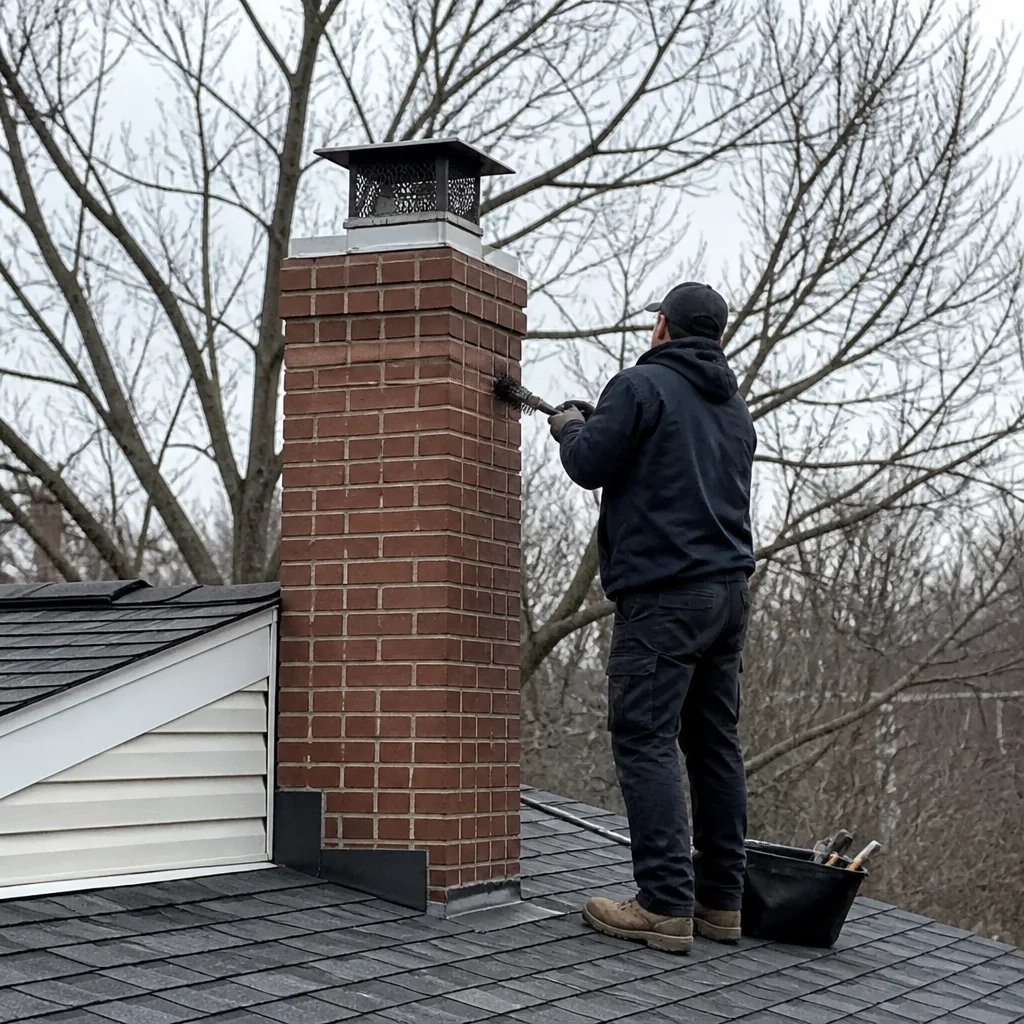
Level 1 sweep and inspection to the NFPA 211 annual standard - flue, crown, cap, and flashing checked and photographed
Chimney sweep logs do not sweep chimneys. They loosen some creosote - which then falls where a brush and vacuum still have to collect it.
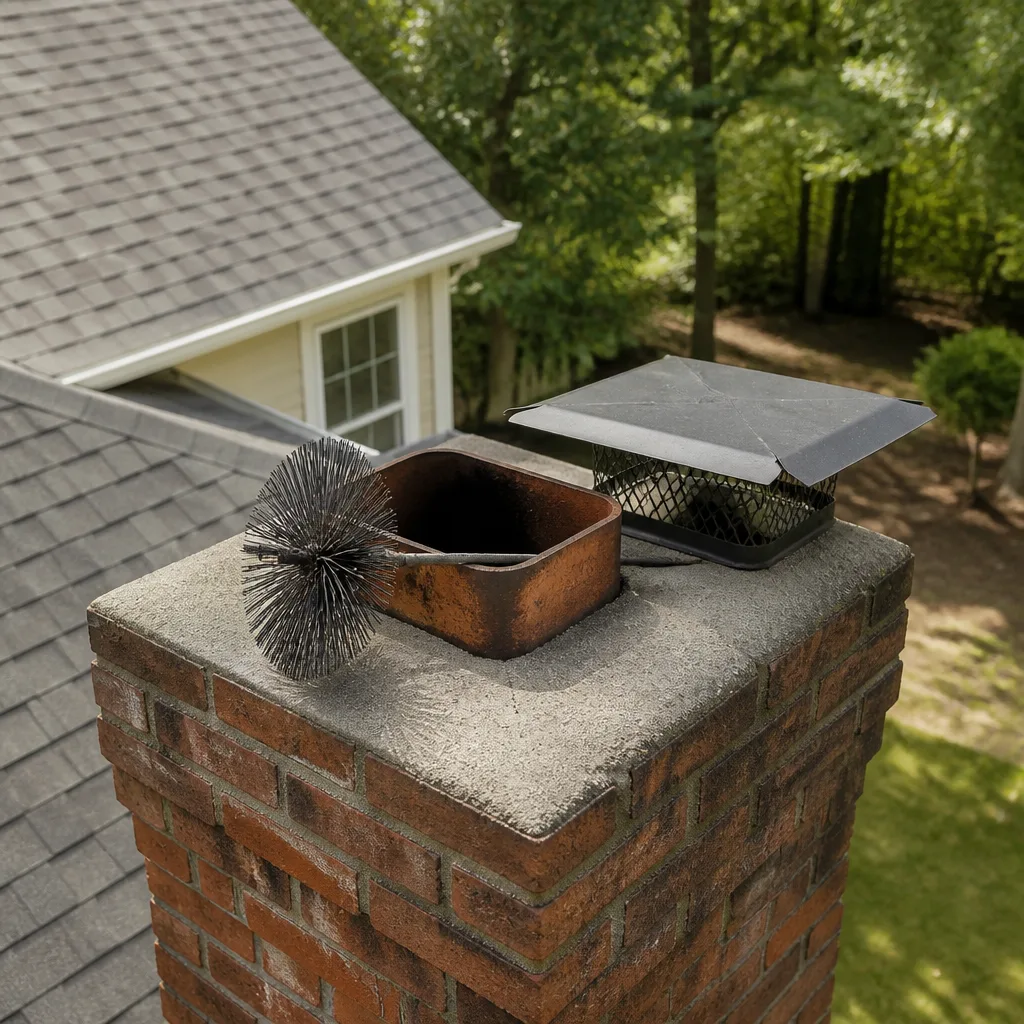

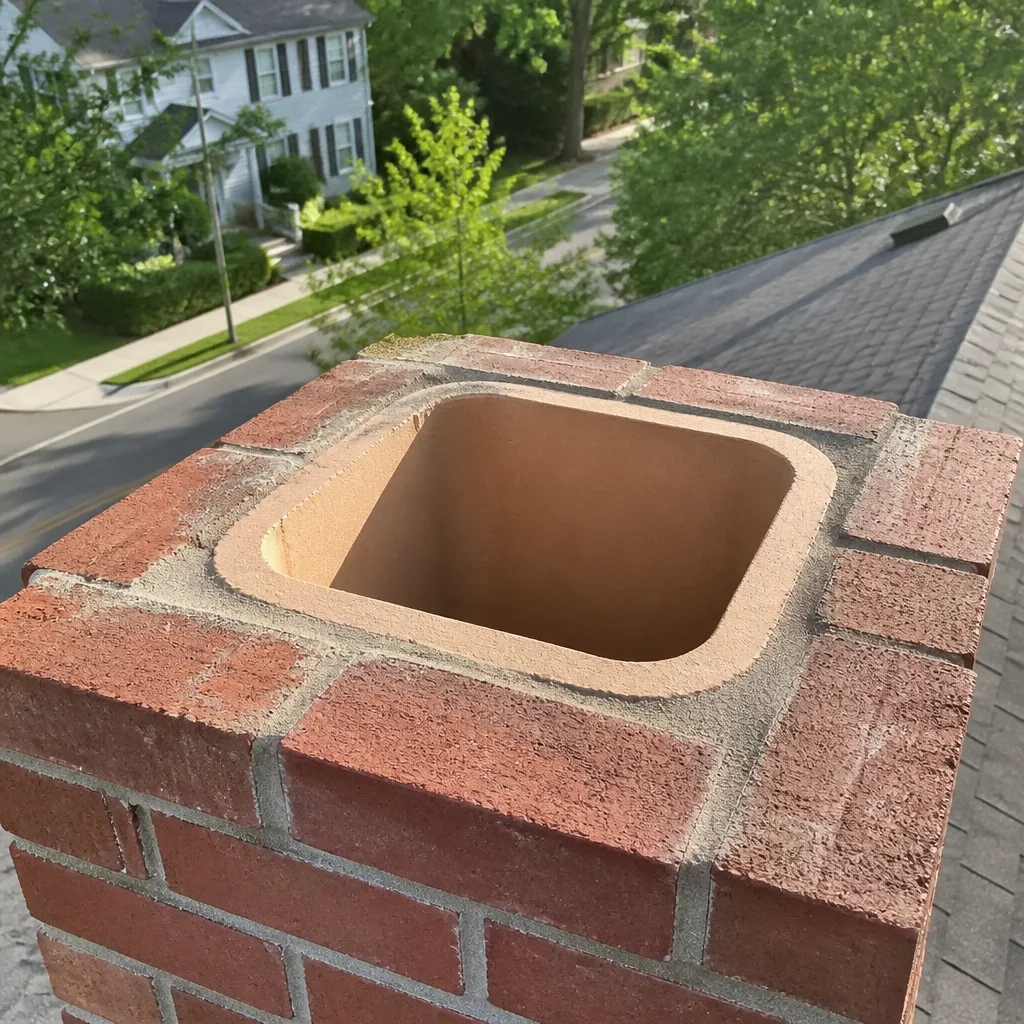
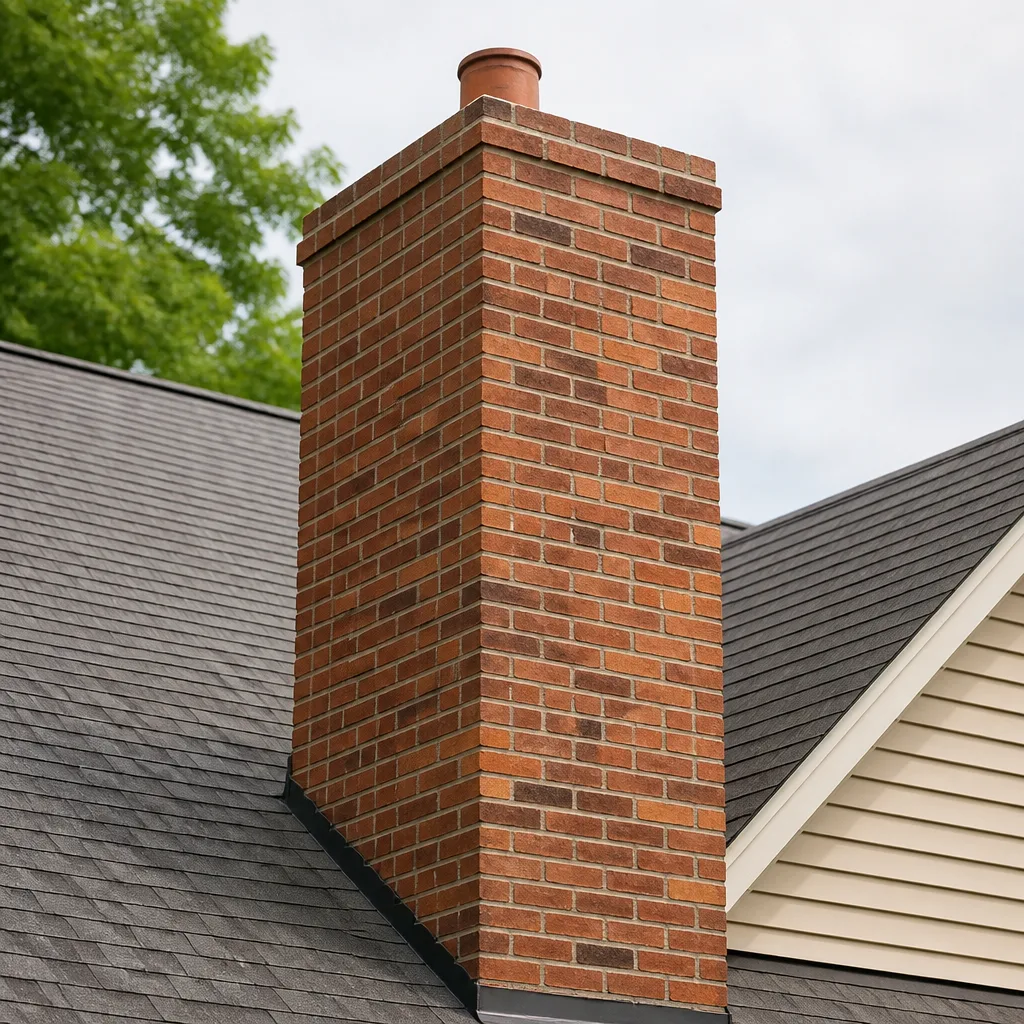
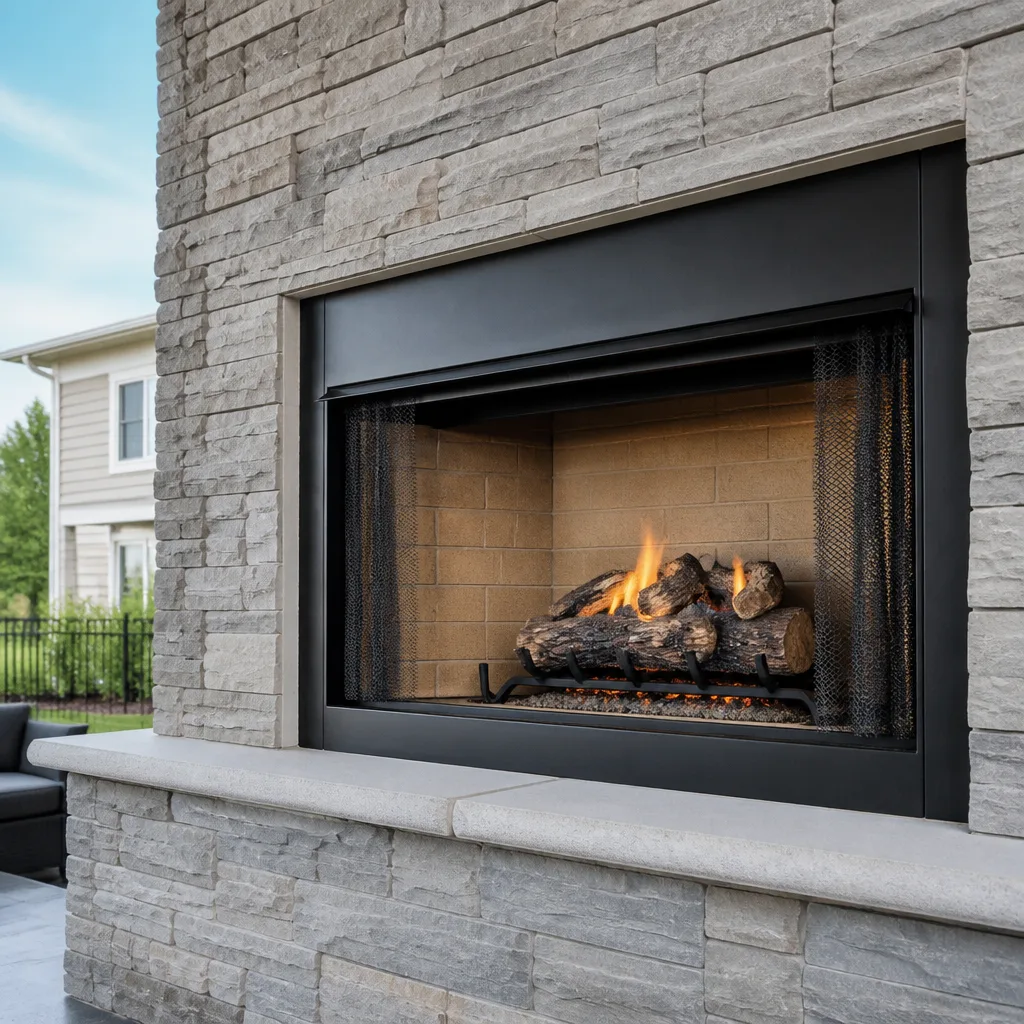
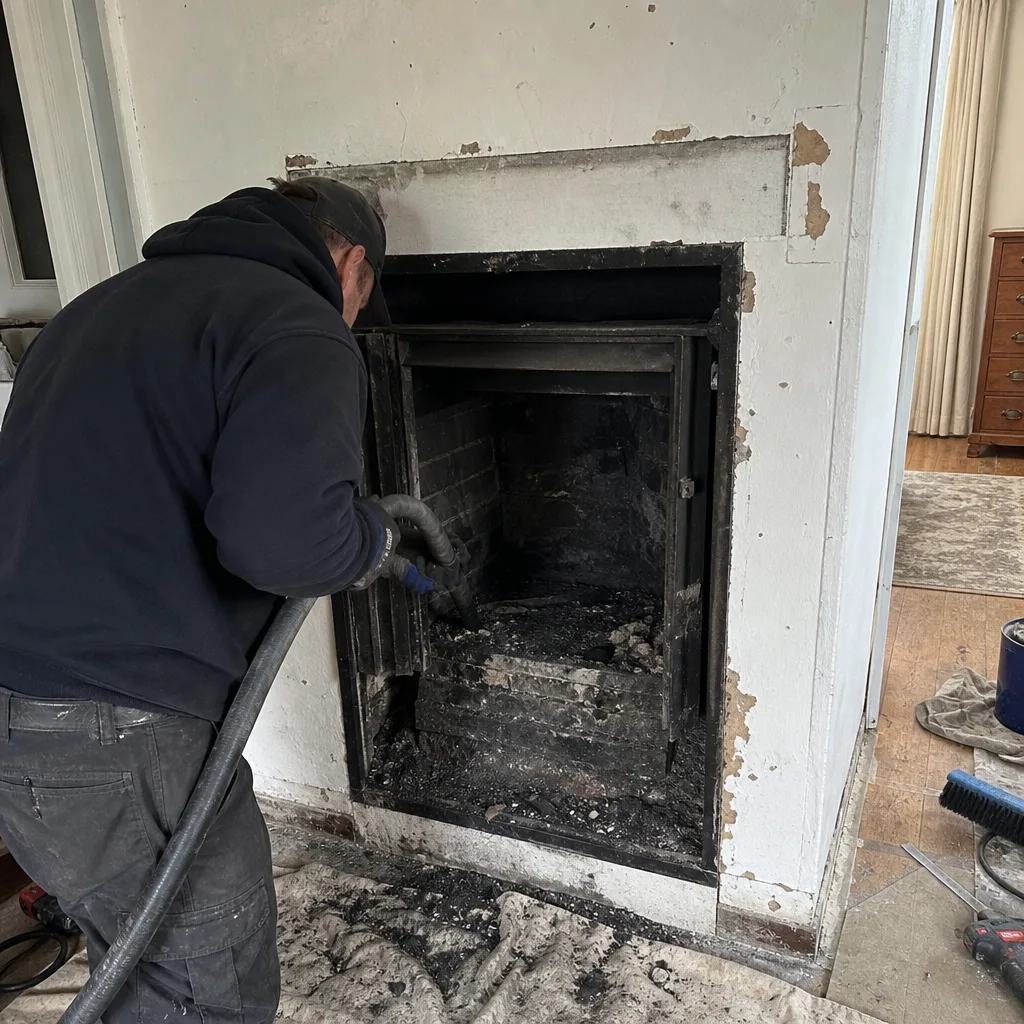 Before
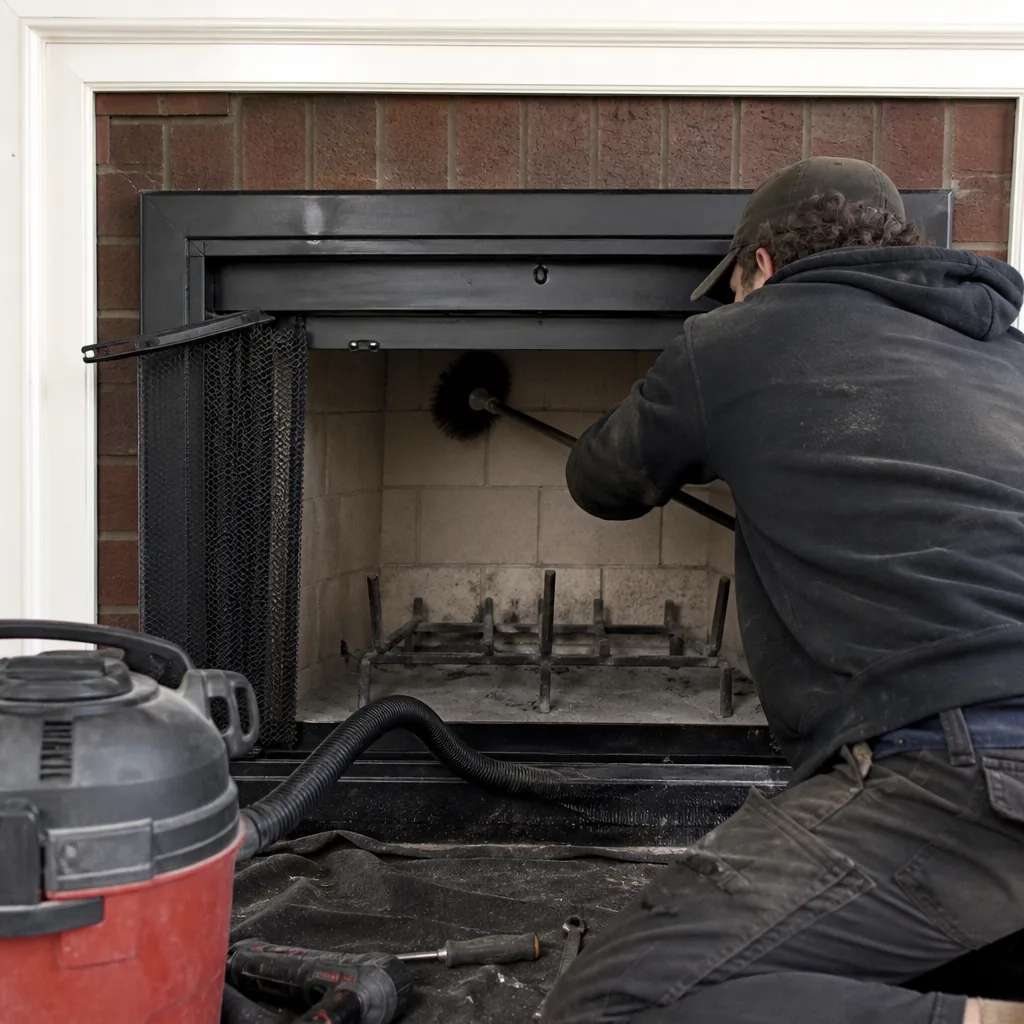 After
After Before
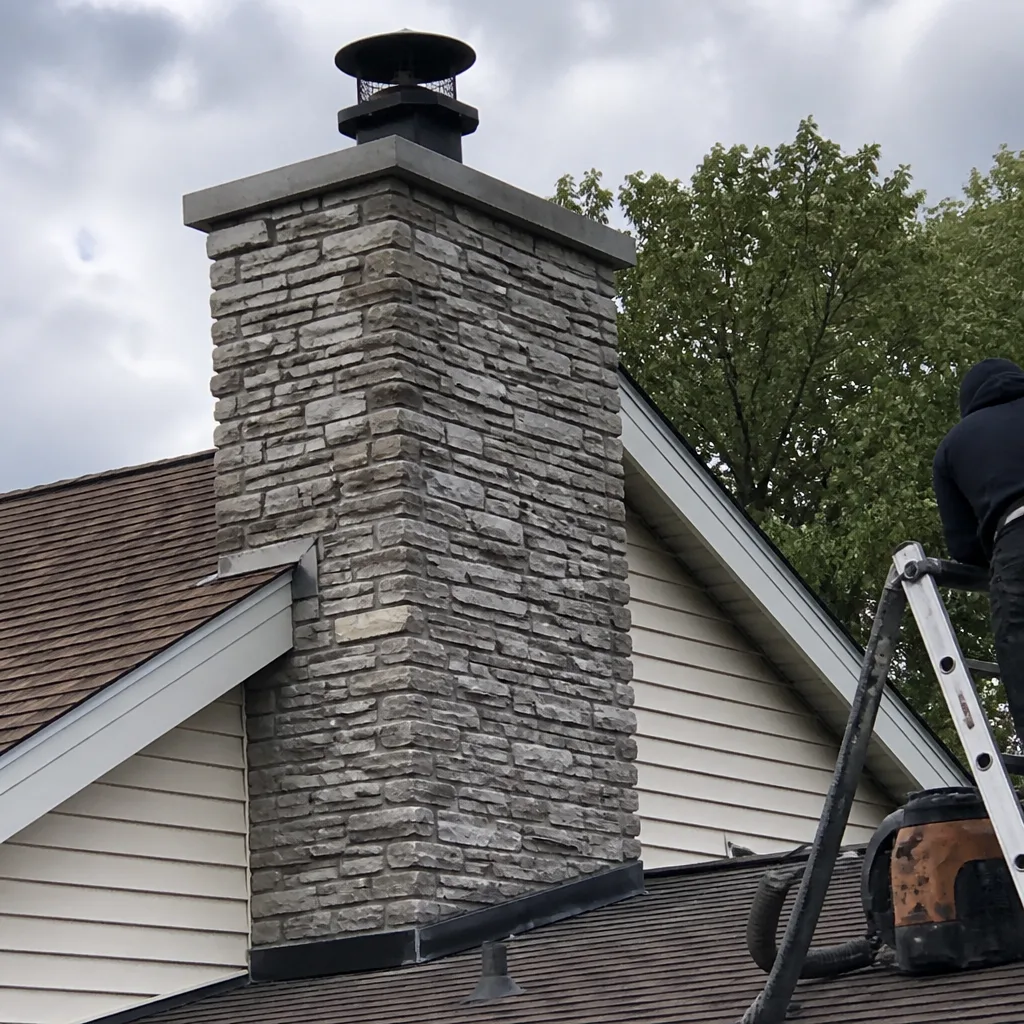 After
After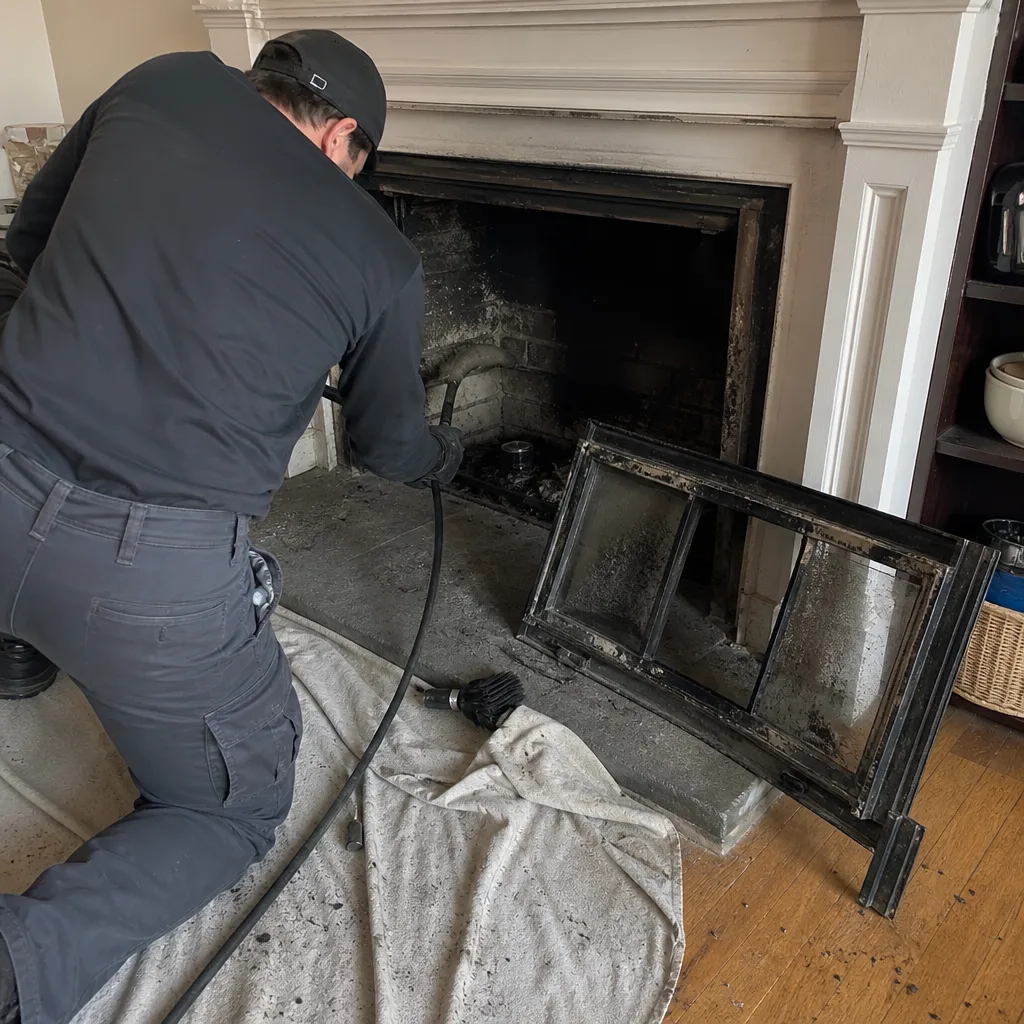 Before
 After
AfterChimney Cleaning Warning Signs: A Ewing Homeowner’s Reference Guide
A white stain on your brickwork isn’t a cleaning problem. It’s evidence that water is moving through your masonry, and by the time that stain is visible on the exterior, moisture has already been working on your liner and mortar joints from the inside. In Ewing, where freeze-thaw cycles run from late November through March, that moisture expands, contracts, and quietly dismantles chimneys while homeowners mistake the early signals for minor cosmetic issues. We’ve spent 42 years translating what chimneys are trying to say. This guide, alongside The Complete Guide to Chimney Cleaning in Ewing, decodes those messages before small repairs become structural failures.
Quick Answer
The most critical chimney warning signs for Ewing homeowners are: white efflorescence staining (indicating moisture intrusion), smoke entering the room during operation (draft failure or blockage), dark staining above the firebox (creosote seeping through liner cracks), and animal sounds or debris in the flue (nesting material creates fire hazards). Some signs mean schedule an inspection within the week; others mean stop using the fireplace today and call a professional. For help deciding, see our DIY vs Professional Chimney Cleaning: The Ewing Homeowner’s Decision Guide.
Table of Contents
- White Stains on Brick: What Efflorescence Is Really Telling You
- Smoke in the Room: Draft Failure, Blockage, or Both
- Dark Staining Above the Firebox: Creosote Seepage and Liner Cracks
- Warning Signs Specific to Gas Inserts and Zero-Clearance Fireplaces
- Animal Intrusion: Sounds, Odors, and Hidden Fire Hazards
- Signs That Appear When the Fireplace Is Cold
- Signs That Appear During Active Fires
- Watch and Monitor vs. Stop Using Today: A Homeowner’s Decision Framework
White Stains on Brick: What Efflorescence Is Really Telling You
That chalky white powder on your chimney exterior has a name: efflorescence. It’s salt left behind when water moves through masonry, dissolves minerals, and evaporates at the surface. The stain itself is harmless. The water causing it is not.
In Ewing’s climate, this pattern is especially common on north-facing chimney walls and on homes in neighborhoods like Mountainview and Braeburn, where mature tree cover keeps masonry damp longer after rain. We’ve inspected chimneys in the Parkside section where efflorescence was the only visible clue that a crown crack had been admitting water for three seasons. By the time the homeowner noticed, the flue liner had spalled and the smoke chamber was saturated.
Here’s what efflorescence reveals about where water is entering:
- Stains on the chimney body below the roofline: Likely crown deterioration or missing cap. Water enters at the top and travels down.
- Stains concentrated at mortar joints: Mortar has softened or was improperly mixed during original construction. Repointing is needed before freeze-thaw cycles widen the gaps.
- Stains on interior chimney walls visible in attic or living space: Flashing failure at the roof intersection. This is often accompanied by ceiling stains inside.
- Stains combined with flaking or spalling brick faces: Advanced moisture damage. The brick is literally shedding its outer layer. This requires structural assessment.
The critical distinction: efflorescence that returns after cleaning indicates an active water source. A one-time stain after driving rain may be incidental. Persistent staining, especially through winter, means water is finding a reliable path. In Ewing’s freeze-thaw environment, that path widens each cycle.
Our Chimney Repair in Ewing crews document crown and flashing conditions with camera inspection photos you can see, along with a plain-English verdict on whether the issue is cosmetic, monitorable, or requires immediate intervention.
Smoke in the Room: Draft Failure, Blockage, or Both
Smoke entering your living space is the chimney’s most urgent distress signal. The question is whether the failure is mechanical (draft system), physical (obstruction), or environmental (pressure conditions in the house).
Draft failure occurs when the temperature differential between flue gases and outside air is insufficient to create upward draw. This is common in Ewing during shoulder seasons, October and April, when homeowners light small fires in chimneys that haven’t warmed sufficiently. The flue is cold, the fire is modest, and smoke has no upward momentum. The solution is a more substantial initial fire or, in persistent cases, a flue extension or fan-assisted draft system.
Physical blockage is more serious. Causes we encounter regularly in Ewing include:
- Creosote buildup exceeding 1/8 inch thickness: Restricts flue diameter and creates fire hazard. Requires professional sweeping.
- Bird nests or squirrel debris: Common in spring and early fall. A single nest can reduce draft efficiency by 60% or more.
- Collapsed flue liner sections: Often follows freeze-thaw damage or original construction with inferior materials. Pieces of clay liner drop into the flue throat.
- Construction debris from original build: We’ve removed bricks, mortar chunks, and even a worker’s lunch bag from flues in Ewing’s 1960s-era ranch homes.
House pressure imbalance is the most overlooked cause. Modern Ewing homes, especially those with recent HVAC upgrades or extensive weatherization, can run slightly negative pressure. Kitchen exhaust fans, bathroom vents, and dryer operation compete with the chimney for makeup air. The fireplace becomes the path of least resistance for air entering the house, reversing normal draft flow.
Diagnostic step: open a window near the fireplace before lighting. If smoke behavior improves, house pressure is likely involved. This doesn’t mean living with an open window; it means the system needs professional balancing assessment.
Smoke in the room during operation always warrants stopping the fire and calling for inspection. Carbon monoxide risk accompanies incomplete combustion, and CO is odorless, colorless, and lethal.
Dark Staining Above the Firebox: Creosote Seepage and Liner Cracks
Dark, oily staining on the masonry or metal facing directly above your firebox opening is not normal soot. It’s creosote that has found a path out of the flue, and that path is almost always a crack or gap in the flue liner.
The flue liner’s job is to contain combustion byproducts and direct them upward. When it cracks, creosote seeps through to the surrounding masonry. In a masonry chimney, this saturates the smoke chamber and can penetrate to exterior walls. In Ewing’s older homes, particularly the pre-war colonials near the College of New Jersey, we’ve found liner cracks that have been depositing creosote into wall cavities for years, creating hidden fire risks and persistent odors.
What the staining pattern tells us:
- Staining concentrated at the top of the firebox opening: Likely smoke chamber deterioration or missing parging. The smoke chamber (the area above the damper) is supposed to be smoothly shaped to direct flow into the flue. Rough or deteriorated surfaces trap creosote.
- Staining that extends up the wall in vertical streaks: Suggests liner cracks at that elevation, allowing creosote to run down the exterior of the liner before finding an exit point.
- Staining with associated white efflorescence: Combined moisture and creosote intrusion. The moisture accelerates liner deterioration and carries creosote deeper into masonry.
- Staining on a metal prefab fireplace: Indicates factory-built unit failure, often warped or cracked firebox panels. These units require manufacturer-specific replacement parts.
Level-2 camera inspection reveals what staining alone cannot: the extent of liner damage, whether cracks are hairline or through-wall, and whether adjacent masonry has been compromised. Learn what to expect in our How to Hire a Chimney Cleaning Contractor in Ewing: A Step-by-Step Guide. Our inspections end with photos you can see and a plain-English verdict on whether relining is necessary or if localized repair is sufficient.
For Ewing homeowners with Fireplace Services in Ewing needs, we specify DuraFlex stainless steel liners or HeatShield cerfractory resurfacing based on what the camera shows, not on a standard sales pitch.
Warning Signs Specific to Gas Inserts and Zero-Clearance Fireplaces
Ewing’s housing stock includes significant post-1980 construction in areas like Kensington and Glendale, where gas inserts and zero-clearance fireplaces are common. These systems fail differently than masonry chimneys, and the warning signs are easy to misread.
Delayed ignition or “boom” at startup: Gas is flowing before flame establishes. Causes include dirty burners, misaligned pilot, or failing ignition assembly. This is a “stop using today” situation. Delayed ignition can damage the firebox and, in extreme cases, create overpressure that cracks glass or warps metal.
Soot on glass doors or interior surfaces: Properly burning natural gas or propane produces minimal soot. Soot accumulation indicates incomplete combustion, which means carbon monoxide production is elevated. Possible causes: restricted combustion air intake, degraded burner ports, or improper fuel-air mixture. The glass should be cleaned only with appropriate products; more importantly, the combustion issue must be diagnosed.
Moisture on interior glass during operation: Normal during initial startup in cold weather. Persistent moisture, especially with associated rust on metal components, indicates venting problems. Condensation in the vent system damages liners and can leak into wall structures. In Ewing’s humid summers, we’ve seen vent systems that never fully dry, accelerating corrosion.
Discoloration of surrounding wall or mantel: Zero-clearance units are designed with specific clearance requirements to combustible materials. Discoloration means those clearances are being exceeded, typically due to improper installation, shifted framing, or unit degradation. This is a fire hazard requiring immediate evaluation.
Remote or switch failure: Often dismissed as a battery or wiring issue. But control failures can mask valve problems that allow gas flow without ignition, or prevent proper shutdown. Any control irregularity warrants professional assessment of the full gas train.
Gas systems require different expertise than masonry. Our technicians are trained on both, and we source replacement components from Famco and Olympia Chimney for venting systems where original parts are unavailable.
Animal Intrusion: Sounds, Odors, and Hidden Fire Hazards
Chimneys are attractive shelter. They’re vertical, protected from weather, and in Ewing’s mature neighborhoods with established tree canopy, easily accessible from overhanging branches.
The signs are specific by season:
- Spring (March-May): Chirping or scratching sounds, especially morning and evening. Often birds, particularly chimney swifts, which are federally protected once nesting begins. A nest with young cannot be disturbed without federal permit.
- Fall (September-November): Scurrying, gnawing sounds, often more active at dusk. Squirrels and raccoons seeking winter shelter. Raccoons can raise masonry chimney caps; squirrels fit through remarkably small gaps.
- Year-round: Sudden, persistent odor of decay. Indicates an animal that did not survive. This is more than unpleasant; decomposition fluids damage masonry and create health hazards.
Why animal intrusion is a fire hazard, not just a nuisance:
Nesting material is the immediate concern. Twigs, leaves, and shredded vegetation are highly combustible. A single squirrel nest can fill a flue throat with enough material to support a chimney fire that reaches 2000°F. We’ve removed nests in Ewing that completely blocked the flue; the homeowner’s first symptom was smoke backing up into the room.
Even after animals depart, remaining debris continues to restrict draft and provides fuel. And the entry point that admitted the animal admits water, beginning the efflorescence and spalling cycle described earlier.
Prevention requires proper capping with animal-proof mesh. Copperfield and Gelco caps we install include appropriate spark arrestor and animal exclusion specifications for Ewing’s common wildlife. The cap must be secured to withstand raccoon leverage and squirrel gnawing; builder-grade installations often fail within a season.
Signs That Appear When the Fireplace Is Cold
Many chimney problems are most detectable when the system is not in use. For year-round maintenance advice, explore more guides & resources. The homeowner who only inspects before the first fire of season misses months of accumulating evidence.
Musty or smoky odor from the fireplace, especially in humid weather: Indicates creosote accumulation absorbing atmospheric moisture. The odor intensifies with humidity because creosote is hygroscopic. In Ewing’s July and August, when relative humidity routinely exceeds 70%, this becomes the most common complaint we field. The solution is sweeping, not air fresheners. The creosote is still there, still acidic, still deteriorating your flue.
Visible debris or soot falling into the firebox: Called “soot fall” or “creosote rain.” Means accumulation above has reached critical mass and is sloughing off. Pieces may be hardened and shiny (third-degree creosote), which is highly combustible and difficult to remove with standard brushing. Requires rotary mechanical cleaning.
Rust on damper or fire grate: Moisture is entering from above. The damper is your only barrier between living space and flue when not in use; rust indicates it’s compromised and may not seal or operate properly.
White or gray powder on interior firebox walls: Different from exterior efflorescence. This is typically combustion residue that has reacted with moisture, indicating both use without adequate cleaning and current moisture intrusion.
Deterioration of adjacent wall or ceiling materials: Peeling paint, stained drywall, or warped trim near the chimney chase indicates moisture migration through the chimney structure. In Ewing’s split-level and bi-level homes, we’ve traced ceiling stains in downstairs rooms to chimney flashing failure two stories above.
Annual inspection during off-season, typically May through September, identifies these conditions before burning season urgency complicates scheduling. Our Chimney Cleaning & Sweep in Ewing includes full firebox, smoke chamber, and accessible flue evaluation with photo documentation.
Signs That Appear During Active Fires
Some warnings only manifest under operating conditions. The homeowner must know what to observe during normal use.
- Smoke lingering in the firebox after the damper is fully open: Indicates draft establishment failure. May be cold flue, but if persistent with established fires, suggests flue restriction or negative pressure.
- Smoke odors in upstairs rooms during fire: Often means smoke is finding paths through construction gaps in the chase. Common in Ewing homes with framed-and-drywall chimney chases rather than full masonry. Requires chase inspection and possible sealing.
- Audible cracking or popping from within the chimney walls: Can be normal thermal expansion, but sharp, irregular cracking may indicate creosote ignition (chimney fire) beginning. A chimney fire sounds like a freight train or low rumble when advanced; early stages are subtler. If in doubt, extinguish the fire and call for inspection.
- Excessive heat on surrounding walls or mantel: Clearance requirements are being violated. This is immediate “stop using” territory. We’ve found mantels that were charred underneath from years of gradual overheating, discovered only when the homeowner finally noticed finish discoloration.
- Flames or glowing visible in the chimney exterior: Active chimney fire. Call 911, evacuate, extinguish the fire if safely possible. Do not assume it will burn out; the fire is in the flue lining and surrounding structure, not the firebox.
- Carbon monoxide detector activation: Never ignored, never reset without cause identification. CO during fireplace operation indicates incomplete combustion, blocked flue, or negative pressure drawing combustion products into living space. Ventilate and call for emergency inspection.
The pattern matters. A single instance during unusual conditions (extreme cold, high winds, house full of guests with multiple exhaust fans running) may be environmental. Repeated instances during normal conditions indicate system failure requiring professional diagnosis.
Watch and Monitor vs. Stop Using Today: A Homeowner’s Decision Framework
Not every warning sign demands immediate cessation of use. Misclassifying a “stop today” sign as “watch and monitor” risks fire or CO poisoning. Overreacting to a monitorable condition creates unnecessary anxiety and expense. Here’s how we guide Ewing homeowners:
Stop using today; call for inspection before next fire:
- Smoke in the room during operation that does not resolve with damper adjustment and window opening
- Carbon monoxide detector activation associated with fireplace use
- Visible flames or glowing in chimney structure
- Audible cracking/popping suggesting creosote ignition
- Excessive heat on combustible surfaces
- Delayed ignition or fuel odor with gas systems
- Known animal nesting with debris in flue
Schedule inspection within one to two weeks; use with heightened observation:
- Efflorescence that is new or worsening
- Dark staining above firebox that is new or expanding
- Musty or smoky odors increasing in intensity
- Soot fall or debris in firebox
- Damper rust or operational stiffness
- Gas system sooting or moisture on glass
Monitor with annual inspection; note for next professional evaluation:
- Minor efflorescence that has been stable for multiple seasons
- Cosmetic brick discoloration without spalling
- Single instance of draft difficulty during unusual conditions
- Normal thermal expansion sounds
The critical discipline: document what you observe, when, and under what conditions. Photos with dates help professionals distinguish progressive conditions from stable ones. Our inspections incorporate homeowner observations; you know your system’s normal behavior better than any visitor.
Common Mistakes to Avoid
- Assuming gas fireplaces need no maintenance. Ewing homeowners with gas inserts often skip annual service, but burner degradation, vent obstruction, and control failure all accumulate silently. Schedule combustion analysis and vent inspection annually.
- Cleaning the firebox but ignoring the flue. A clean firebox looks satisfying but reveals nothing about creosote buildup above the damper, where temperatures and accumulation rates are highest.
- Using chimney cleaning logs as substitute for sweeping. These products may reduce light creosote but do not remove third-degree deposits and provide no inspection of liner condition. They create false confidence.
- Ignoring signs in shoulder seasons. The October fire and April fire are when draft problems appear, because temperature differentials are smallest. Dismissing these as seasonal quirks misses developing blockages.
- Hiring based on lowest quote without verifying scope. In Ewing’s market, a “sweep” can mean anything from a 20-minute brush pass to a full Level-2 inspection with camera documentation. Verify what is included, and whether the company carries proper insurance and follows CSIA standards.
- Delaying cap installation after animal removal. The same squirrel returns next season. The same branch still overhangs. Permanent exclusion is part of proper resolution, not an upsell.
- Attempting DIY flue repair or liner installation. Flue gases are lethal. Liner sizing requires combustion analysis and NFPA calculation. We’ve corrected DIY installations that created immediate carbon monoxide hazards.
When to Call a Professional
Call when any “stop using today” sign appears, when annual inspection is due, or when you’ve purchased a home with unknown chimney history. In Ewing’s older neighborhoods, we’ve found systems that haven’t been professionally evaluated in decades, with multiple compounding issues masked by cosmetic repairs.
Specific scenarios warranting immediate professional contact: visible structural damage to chimney body, water entry during rain, persistent odors despite cleaning, any gas system irregularity, and any indication of previous chimney fire (often revealed by distorted metal components or thermal cracking).
Hearthstone Chimney Co. offers free estimates in Ewing. A Level-2 inspection with camera documentation takes approximately 90 minutes and ends with photos you can see and a plain-English verdict. No recommendation is made without evidence you can evaluate yourself. Call (856) 388-5580 to schedule. Our phones are answered by a live person, 24 hours a day, 7 days a week.
Frequently Asked Questions
A standard chimney sweep and Level-1 inspection in the Ewing area typically ranges from $175 to $275, while a Level-2 inspection with camera documentation runs $325 to $450 depending on accessibility and system complexity. Our $89 Seasonal Tune-Up offers a limited-time entry point for qualifying systems, and we provide no-hassle upfront pricing so the estimate number matches the invoice number. Call (856) 388-5580 for exact pricing on your specific system.
You need a new liner when camera inspection reveals cracks that compromise containment of combustion byproducts, or when the existing liner is incompatible with your current appliance type. We never recommend relining without photo evidence you can see, and we’ll plainly tell you when a condition can be monitored rather than repaired. In Ewing’s freeze-thaw climate, existing cracks rarely improve with time.
The National Fire Protection Association recommends annual inspection for all chimney systems, with sweeping frequency based on use and fuel type. Wood-burning systems in regular use typically need annual sweeping; gas systems need annual combustion and venting inspection. Ewing’s oak and maple firewood burns relatively clean, but our freeze-thaw moisture cycle accelerates liner deterioration, making annual inspection particularly valuable.
Skipped maintenance leads to creosote accumulation that fuels chimney fires, moisture intrusion that destroys masonry from within, and undetected liner cracks that allow combustion gases into living spaces. In our experience, the homeowner who skips three years of maintenance typically faces repair costs 4 to 6 times higher than the maintenance would have cost, often with safety consequences that cannot be reversed.
Summer humidity reactivates creosote deposits in your flue, releasing acidic compounds and combustion odors. The smell is evidence of accumulated creosote, not merely weather. Sweeping removes the source; deodorizing treatments without sweeping are temporary. In Ewing’s humid July and August, this is our most common seasonal call.
Chimney swifts are protected under the Migratory Bird Treaty Act. Once nesting has begun, removal requires federal permit and is typically prohibited until young have fledged. Prevention through proper capping before nesting season is the legal and practical solution. We install Famco and Copperfield caps with appropriate exclusion mesh during off-season to prevent spring occupancy.
Signs of previous chimney fire include: puffy or honeycombed creosote deposits, discolored or distorted rain cap or chimney cap, cracked or spalled flue tiles, heat-damaged roofing materials near the chimney, and smoke damage on exterior masonry. Many chimney fires burn slowly and quietly; the homeowner notices only unusual odor or noise. Any suspicion warrants professional evaluation.
The Bottom Line
Your chimney communicates through specific, observable signs. White stains report moisture intrusion. Smoke in the room reports draft failure or blockage. Dark staining reports liner compromise. Gas system irregularities report combustion or venting problems. Animal presence reports entry points that admit both wildlife and water. The discipline is learning the vocabulary, then acting with appropriate urgency. Some conditions allow measured response; others demand immediate cessation of use. When in doubt, professional evaluation with camera documentation removes uncertainty. We’ve been answering Ewing’s chimney questions for over 42 years, and we plan to be here when the next question arises.
Written by Russell Haines, Owner at Hearthstone Chimney Co., serving Ewing since 2014.